LEATHERLAND SURNAME AND LITHERLAND
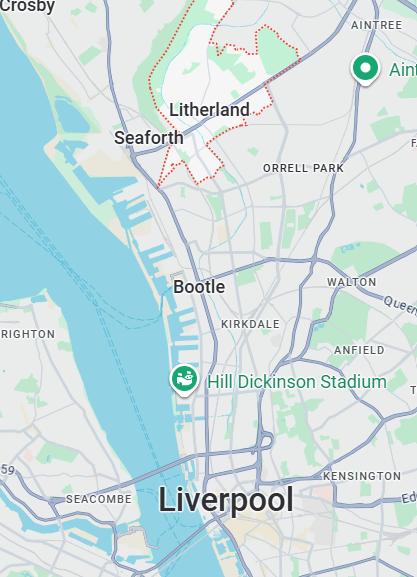
Leatherland is probably a locative name originating from the Lancashire town of Litherland which is five miles north of Liverpool city centre. The Lancashire Victoria County History shows that the history of the town extends back at least to the 11th century, indeed it includes a reference to a Randle de Litherland who held land there in 1212, who may be one of the first bearers of the surname.
Of course as with most surnames derived from a location, some medieval Litherlands may not actually be related to each other. Another problem is that some medieval surnames were only bynames (non-hereditary names added to an individual's given name to distinguish them from others).
Richard McKinley wrote a book about Lancashire surnames which has a reference to a Letherland in the Liverpool Oath Rolls (1696) who was from Litherland. He points out that locative surnames have been the largest category of surnames in Lancashire since the 13th century, and that the county has a higher proportion of locative surnames than most English counties.
My analysis of sixteenth century parish registers indexed online showed that Litherland was the most common surname spelling and that Lancashire was the top county for baptisms, marriages and burials. This reinforces the theory that the name derived from the town of Litherland.
There is no evidence of a link to leather workers. The ‘land’ suffix implies that the surname is locational rather than occupational. My theory is that the spelling may have developed to begin with “Leather-“ or “Lether-“ simply because it was a more familiar term than “Lither-“.
Leatherland is a very rare surname. In the 1861 census there were 741 Leatherland / Litherland and variants which was just 0.003% of the total population of 23 million. The Prerogative Court of Canterbury Wills index covers seven centuries up to 1858 and has just over one million wills, but there are only twenty-five Leatherland and similar variant surnames in the index. The Prerogative and Exchequer Court of York Wills index covers the same timeframe and has 2.46 million wills, but there are only forty-eight Leatherland and variant surname wills. The National Probate Calendar (1858-1995) has twenty million wills, but only 807 Leatherland and variant surname wills.

Litherland surname distribution 1881
My study of the censuses showed Litherland remained the most common version of the surname in the nineteenth and twentieth century, and that Lancashire was the county where the surname was most commonly found. Leatherland is found predominantly in Nottinghamshire and Leicestershire, with a small number in Northamptonshire and Warwickshire. All versions of the surname were rare in the rest of the country.
These results support the theory that the surname is derived from Litherland in Lancashire but that, when Litherlands moved south to the Midlands, variants developed, possibly because priests and clerks were unfamiliar with the place name. But in Lancashire the name generally remained as Litherland.

Leatherland surname distribution 1881
Sixteenth and seventeenth century parish register data from Findmypast and Ancestry shows a greater variation in surname spelling, eg out of 180 baptisms, Litherland comprised 42% of the total, then Letherland (23%) then Lytherland (21%). I found only one Leatherland baptism. Lancashire was the top county for baptisms, marriages and burials, reinforcing the theory that the name derived from the town of Litherland.